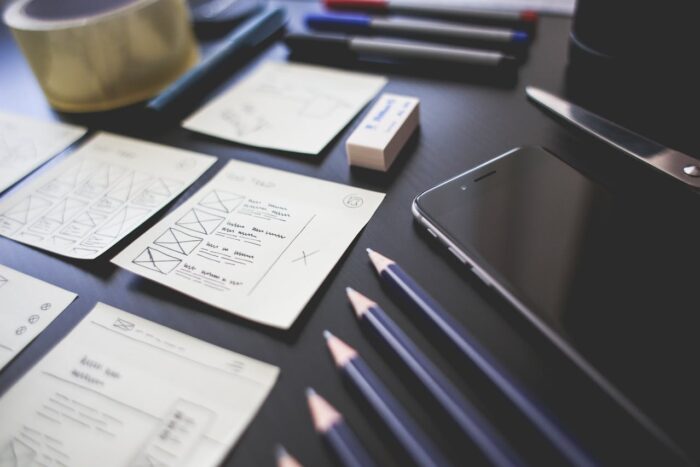
How to Evaluate an Idea Before Investing in Development

Ideas are easy; execution is costly. Before committing resources to development, it’s essential to evaluate whether an idea has real potential. This process combines research, validation, and testing to answer key questions: does this solve a genuine problem, is there an audience willing to pay, and how does it stand against competitors?

Evaluation often begins with lightweight experiments like surveys, landing pages, or prototype tests. These tools provide early signals about user interest and usability. By stress-testing assumptions before writing a single line of production code, companies can make smarter decisions, reduce risk, and focus their investment on ideas that stand the greatest chance of success.


Designing Offline Paths: Making Mobile Apps Work Anywhere

Users expect mobile apps to work seamlessly, even when connectivity is poor or nonexistent. Offline-first design addresses this by ensuring critical functions remain available without constant internet access. Whether it’s saving progress, caching content, or allowing deferred actions, offline paths create a sense of reliability that keeps users engaged.

Designing for offline use isn’t just a convenience, it can be a competitive advantage. Apps that continue to deliver value without disruption build trust and stand out in crowded markets. By planning for offline scenarios, businesses can create resilient mobile experiences that adapt to the real-world conditions their users face.

MVPs Done Right: Building Just Enough to Test and Learn

An MVP expirement isn’t about building half a product. The purpose of an MVP is to validate assumptions quickly, test hypotheses with real users, and gather insights that inform the next phase of development. This approach helps teams minimize wasted resources while maximizing learning.

The best MVPs are focused, simple, and targeted at solving a core problem for a specific audience. By putting an MVP into users’ hands, companies gain valuable feedback that shapes the product direction. Done right, MVPs accelerate innovation and reduce risk, giving businesses confidence that they’re building something truly valuable.

Designing Flows That Keep Mobile Users Engaged

On mobile devices, every tap counts. Users expect speed, simplicity, and clarity, and they won’t hesitate to leave if the experience feels cumbersome. Designing effective flows means reducing friction at every step, from login and onboarding to search, checkout, or support.

Great mobile flows anticipate user needs and provide intuitive guidance. They eliminate unnecessary steps, use clear microcopy, and deliver feedback instantly. By focusing on clarity and efficiency, businesses create experiences that feel natural, keep users engaged, and encourage repeat interactions in a highly competitive mobile-first world.

The Role of UX Audits in Unlocking Product Potential

Even the most well-designed products can develop blind spots over time. Complex navigation, inconsistent design patterns, or unnecessary friction can slowly erode user satisfaction. A UX audit helps uncover these issues by evaluating the product’s usability, accessibility, and overall flow through the eyes of real users.

Beyond identifying problems, UX audits reveal hidden opportunities. They highlight areas where the experience can delight users, where onboarding can be simplified, and where conversions can improve. By investing in UX audits, companies can maximize product potential, strengthen customer loyalty, and unlock growth opportunities that may otherwise remain hidden.

From Onboarding to Growth: Mapping a Product Roadmap That Works

A product roadmap is more than a timeline of features — it’s a story of how your product will evolve to meet the needs of your users and your business. A strong roadmap begins with onboarding, because the first impression sets the tone for the entire journey. If users don’t experience value quickly, even the most innovative products struggle to gain traction.

As your product matures, the roadmap should shift focus toward retention and growth. This means building features that deepen engagement, adding pathways for expansion, and aligning updates with customer feedback. A well-designed roadmap balances short-term wins with long-term vision, ensuring that every release isn’t just another feature, but a step toward sustainable growth and customer success.

Launching Thespesio Studio Online

Thespesio Studiois now live. Our new website introduces who we are and what we do: a small, independent lab for digital ideas. We blend product thinking with hands-on craft to explore concepts, build tools, and support ideas worth pursuing.

The site is designed as a simple, clear space to share our focus areas: digital experiments, web experiences, design systems, and groundwork for future projects. It’s both a home for our ongoing work and a way to connect with people who share our values.

No noise, no hype, just a presence that reflects how we work: quietly, thoughtfully, and with care for clarity. This launch is only a beginning. More experiments, designs, and collaborations are on the way.

Follow along as we publish new experiments.